

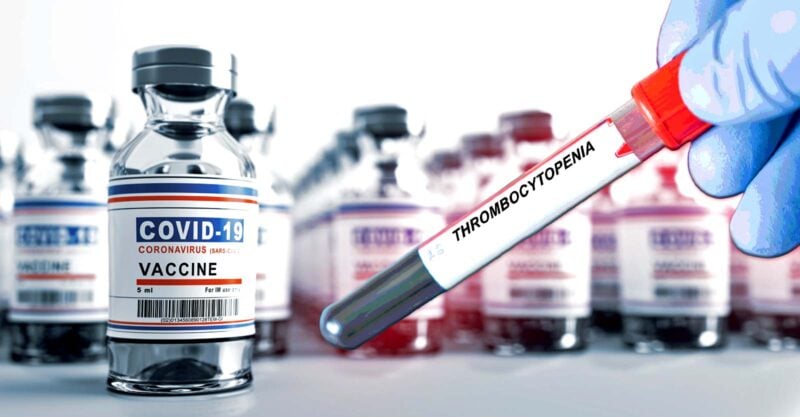
A new peer-reviewed study has identified how the AstraZeneca and Johnson & Johnson (Janssen) COVID-19 vaccines can cause a rare blood-clotting condition. The New England Journal of Medicine study found that an immune response to the adenovirus contained in the vaccines can cause vaccine-induced immune thrombocytopenia and thrombosis.
by Michael Nevradakis, Ph.D.
February 19, 2026
A new peer-reviewed study has identified how the AstraZeneca and Johnson & Johnson (Janssen) COVID-19 vaccines can cause a rare blood-clotting condition.
The study, published last week in the New England Journal of Medicine (NEJM), found that an immune response to the adenovirus contained in the vaccines can cause vaccine-induced immune thrombocytopenia and thrombosis (VITT).
The AstraZeneca and Johnson & Johnson (J&J) vaccines used an adenoviral vector to deliver a gene for SARS-CoV-2’s spike protein into the body’s cells.
The study notes that in rare cases, VITT is also linked to natural adenovirus infection, which typically produces cold symptoms.
Approximately 1 in 200,000 people who received the AstraZeneca or J&J vaccines were diagnosed with VITT. The condition is characterized by thrombosis — blood clotting — often in the brain or abdomen, the University of Minnesota’s Center for Infectious Disease Research and Policy reported.
VITT is accompanied by immune thrombocytopenia, an autoimmune condition that causes uncontrolled bleeding. Multiple reports of VITT followed the rollout of the COVID-19 vaccines. The reports were often linked to the AstraZeneca and J&J vaccines.
The NEJM study’s lead researcher, Dr. Ted Warkentin, professor emeritus of pathology and molecular medicine at McMaster University in Canada, told The Defender that his team studied the blood samples of 100 VITT patients who received either the AstraZeneca or J&J vaccine.
All the patients shared a gene present in 60% of people of European descent. Some also had prior adenovirus infections.
According to the study, the patients’ bodies attacked their own platelets — tiny cell fragments crucial for blood clotting and wound healing — causing them to clump together. This resulted in a low platelet count and the formation of blood clots.
The researchers discovered that in a small number of people, the immune system “can accidentally confuse a normal adenovirus protein with a human blood protein termed platelet factor 4” (PF4), resulting in clotting.
This occurred due to similarities between platelets and the adenovirus contained in the vaccines — a mechanism known as molecular mimicry. In a 2024 paper, the same researchers found that VITT was caused by the adenovirus in the vaccines.
Warkentin said the study’s findings are significant because this mechanism of “adverse immune reaction” was previously unrecognized. He said the mechanism may also be responsible for other vaccine-related adverse events.
“We expect that certain other rare adverse reactions will also potentially be explained by a somatic mutation in an antibody-producing cell,” Wartenstein said.
Brian Hooker, Ph.D., chief scientific officer for Children’s Health Defense (CHD), said the study shows that while vaccines are treated in a “one-size-fits-all” manner, “we are all different, and those differences have consequences, even dire consequences, when they are not reflected correctly when formulating vaccines and other biologics.”

