
British Columbians more aware of UNDRIP than others in the country; most would hold referendum on it
August 25, 2025 – British Columbia has seen historic and controversial developments in Indigenous land rights. In April 2024, the Haida Nation’s title to Haida Gwaii was formally recognized, while in May 2025 the Cowichan Tribes’ court victory over land title in Richmond sparked a provincial appeal. These events underscore both progress and tension as B.C. works to align with its commitment to the United Nations Declaration of the Rights of Indigenous Peoples, while also maintaining a robust development pace to deal with threats from south of the border and the private property rights of residents.
New data from the non-profit Angus Reid Institute finds British Columbians largely divided over this commitment from their province, the only in Canada to have signed on to UNDRIP.
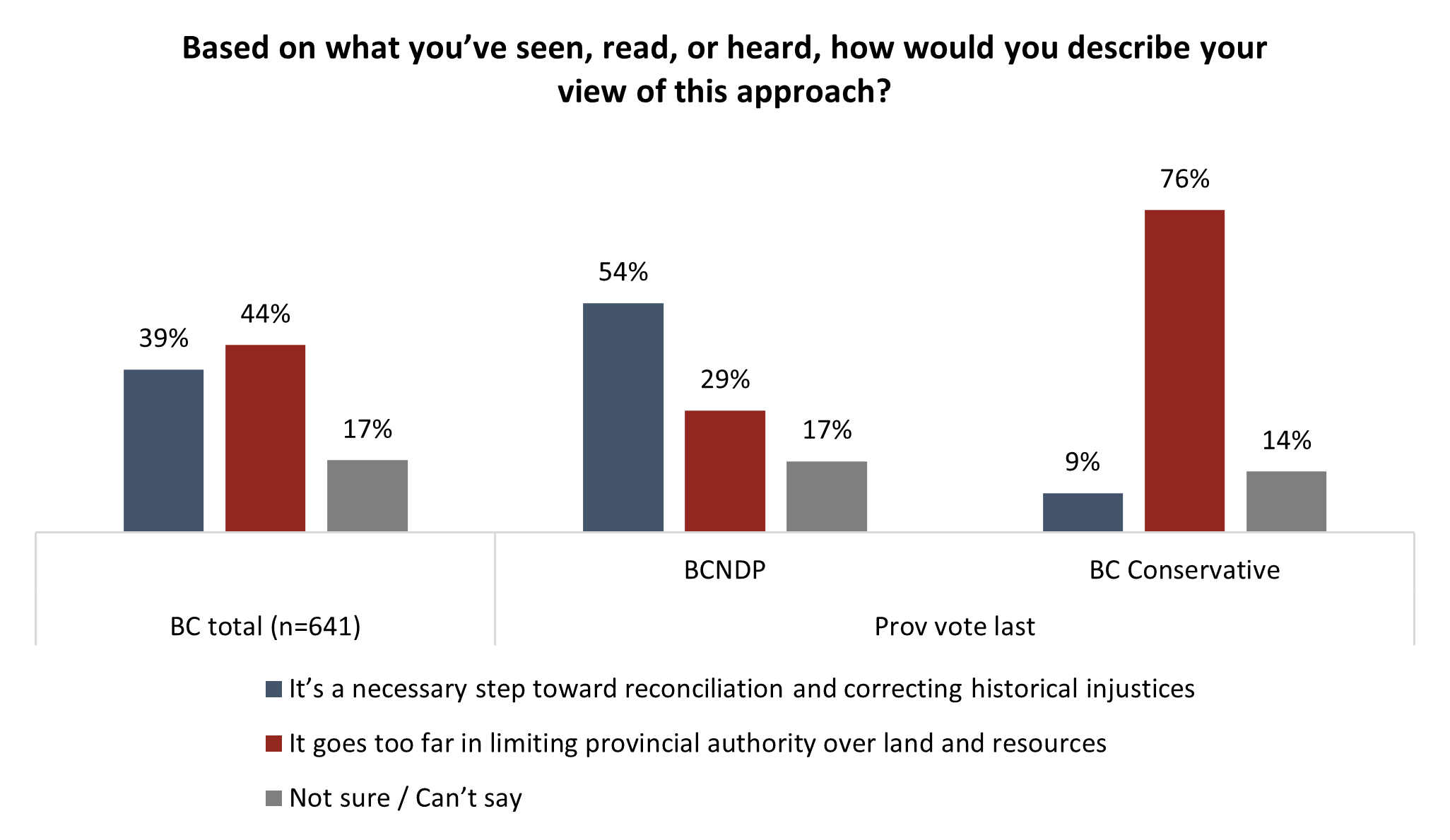
Overall, two-in-five (39%) say this commitment is necessary as a step toward reconciliation, while slightly more (44%) say UNDRIP goes too far in limiting provincial authority over land and resources. The tension between Indigenous title claims and private property has been on display this summer after the B.C. Supreme Court issued a landmark ruling affirming the Cowichan Tribes’ Aboriginal title to roughly 800 acres of land in Richmond. The province swiftly appealed, warning of potential ripple effects for private land titles across B.C.
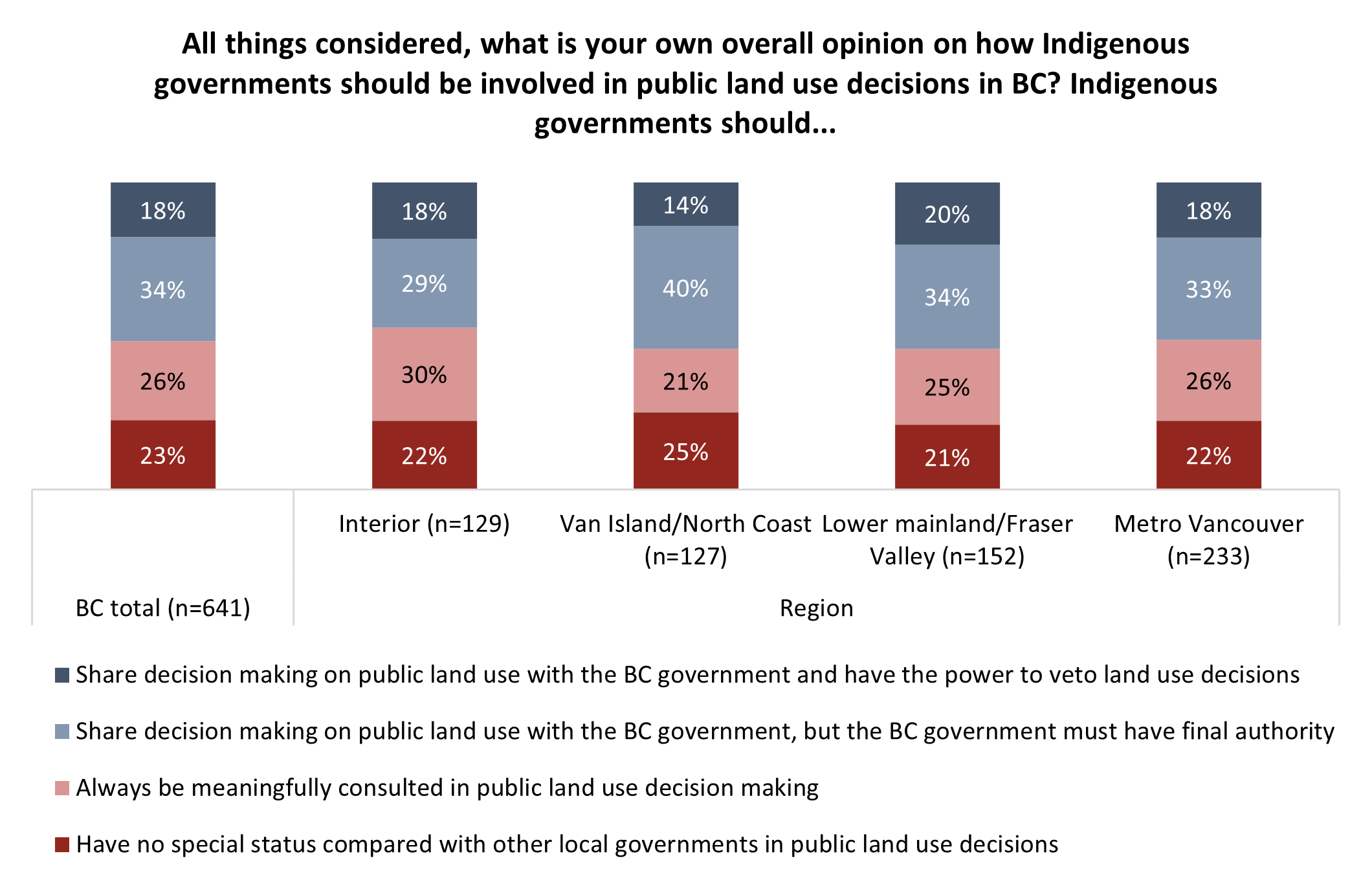
On the question of what role Indigenous groups should have in public land use decisions, views are similarly complex. Just one-in-five (18%) say Indigenous governments should be involved in shared decision-making and have a veto, but 34 per cent say they should share in decision-making and leave final authority to the provincial government. A further one-quarter (26%) support meaningful consultation but no role in decision-making, and one-quarter (23%) say Indigenous groups should be treated the same as others in the province.