

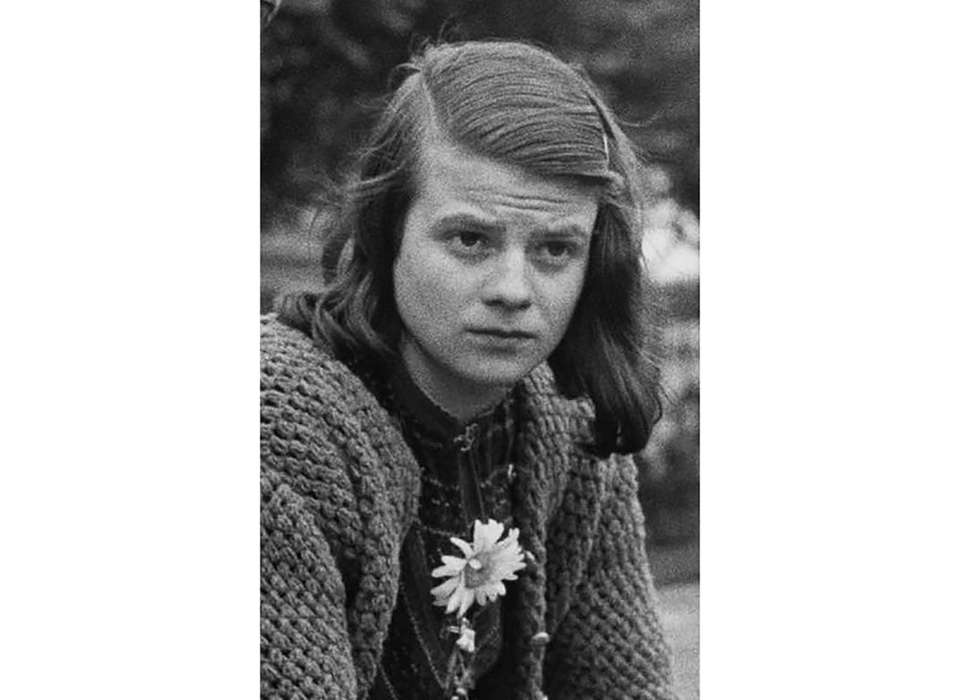
Sophie Scholl and the White Rose movement, while less known to Americans, is a powerful example of youthful resistance to the Nazi Regime.
Within the United States, Sophie Magdalena Scholl is not the best-known resistance fighter, but her story is a powerful one. She was a key member of the Weiße Rose (White Rose)—a resistance group run by students at the University of Munich who distributed leaflets and used graffiti to decry Nazi crimes and the political system, while calling for resistance to the Nazi state and the war. On February 22, 1943, she was beheaded for treason at just 21 years old.
Sophie was born in May 1921, the fourth of six children to an upper-middle class family in the south of Germany. Robert, her father, was mayor of Forchtenberg, an idyllic town in the northeast of the modern state of Baden-Württemberg. When Sophie was 10, the family moved to Ulm, a mid-size southern town dating back to the Middle Ages, where her father worked as state auditor and tax consultant.
After the Nazis came to power in January 1933, Sophie, along with most of her siblings, was an excited and happy follower of the National Socialist cult of youth. The teenager believed in the ideals propagated at the time. Similar to many of their contemporaries, Sophie was particularly intrigued by the focus on nature and communal experiences. She joined the BDM, the Bund Deutscher Mädel (League of German Girls) and quickly rose in their ranks. The parents, especially her father, did not like their children’s’ involvement in the Nazi youth groups and made no secret about it. A critic of the party from the beginning, who had raised their children firmly grounded in the Christian tradition, Robert Scholl viewed the developments in Germany and their children’s interest in Nazism with growing fear and horror. Lively discussions were a daily occurrence at the dinner table, teaching the children the value of open and honest conversation—a rarity at the time.
Sophie’s siblings, especially her oldest brother Hans, later to become a founding member of the Weiße Rose, also were members of non-Nazi groups of young people. These associations shared and propagated a love for nature, outdoor adventures, as well as the music, art and literature of German Romanticism. Originally seen as compatible with Nazi ideology by many, these alternative groups were slowly dissolved and finally banned by 1936. Hans remained active in one such group, however, and was arrested in 1937 along with several of the Scholl siblings. This arrest left a mark on Sophie’s conscience and began the process that eventually turned her from happy supporter of the Nazi system to active resistance fighter.
On September 1, 1939, Hitler invaded Poland and two days later, France and Britain declared war on Germany. The older Scholl brothers were sent off to fight on the front. Sophie’s life in Ulm changed as well. She graduated high school in the spring of 1940 and started an apprenticeship to become a kindergarten teacher. She eventually wanted to study biology and philosophy. In order to be admitted, students had to spend a period of time working for the state in the Reichsarbeitsdienst (RAD; National Labor Service). Sophie’s hopes that becoming a teacher would allow her to substitute for the RAD were quashed and she instead had to enter the service in the spring of 1941. She hated it. The military-like regimen and mind-numbing routine caused her to find solace in her own spirituality, guided by readings of theologian Augustine of Hippo. She wrote down her thoughts, noting that her “soul was hungry”—she longed for an autonomous life, an end to the war, and for happiness with her boyfriend Fritz Hartnagel, who was now fighting on the Eastern front. Her doubts about the regime grew.
When she finally moved to Munich to study biology and philosophy in May 1942, her brother Hans, a medical student at the same university, and some of his friends had already begun to actively question the system. Serving on the Eastern Front, they learned about the crimes committed in Poland and Russia first hand and saw the misery with their own eyes. They knew they couldn’t remain quiet. Starting in June 1942, they began printing and distributing leaflets in and around Munich, calling their fellow students and the German public to action. Other members of their circle joined in the endeavor, writing four pamphlets until the fall of the same year. As a student, Sophie had seen the flyers and applauded their content as well as their authors’ courage to speak truth to power. When she found out about her brother’s involvement, she demanded to join the group. She did not want to stay passive anymore.
Read More HERE

