

If you got multiple COVID-19 booster shots, something happened to your immune system that your doctor probably never mentioned, and that your post-vaccination blood test almost certainly cannot detect.
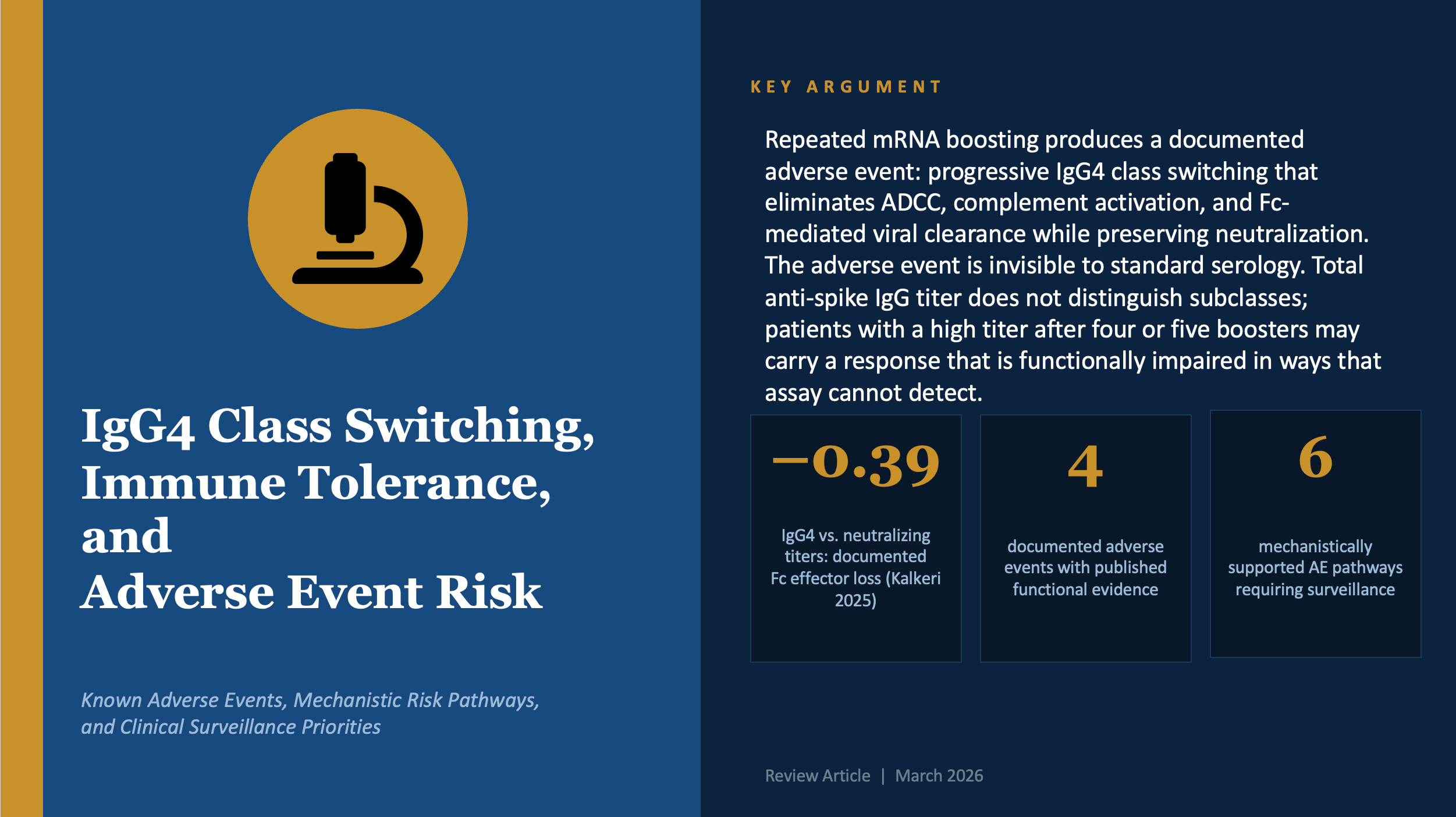
A growing body of peer-reviewed research published between 2023 and 2025 documents that repeated mRNA boosting causes a progressive shift in the type of antibody your immune system produces against the virus. This shift is not random noise. It follows a well-understood biological pattern. And it has measurable, functional consequences.
This article explains what that shift is, what it means, who it matters most for, and what should be done about it. No prior immunology background is required.
The standard post-vaccination blood test that tells you how much antibody you have says nothing about what kind of antibody you have. After multiple boosters, that distinction matters.
Not all antibodies are the same
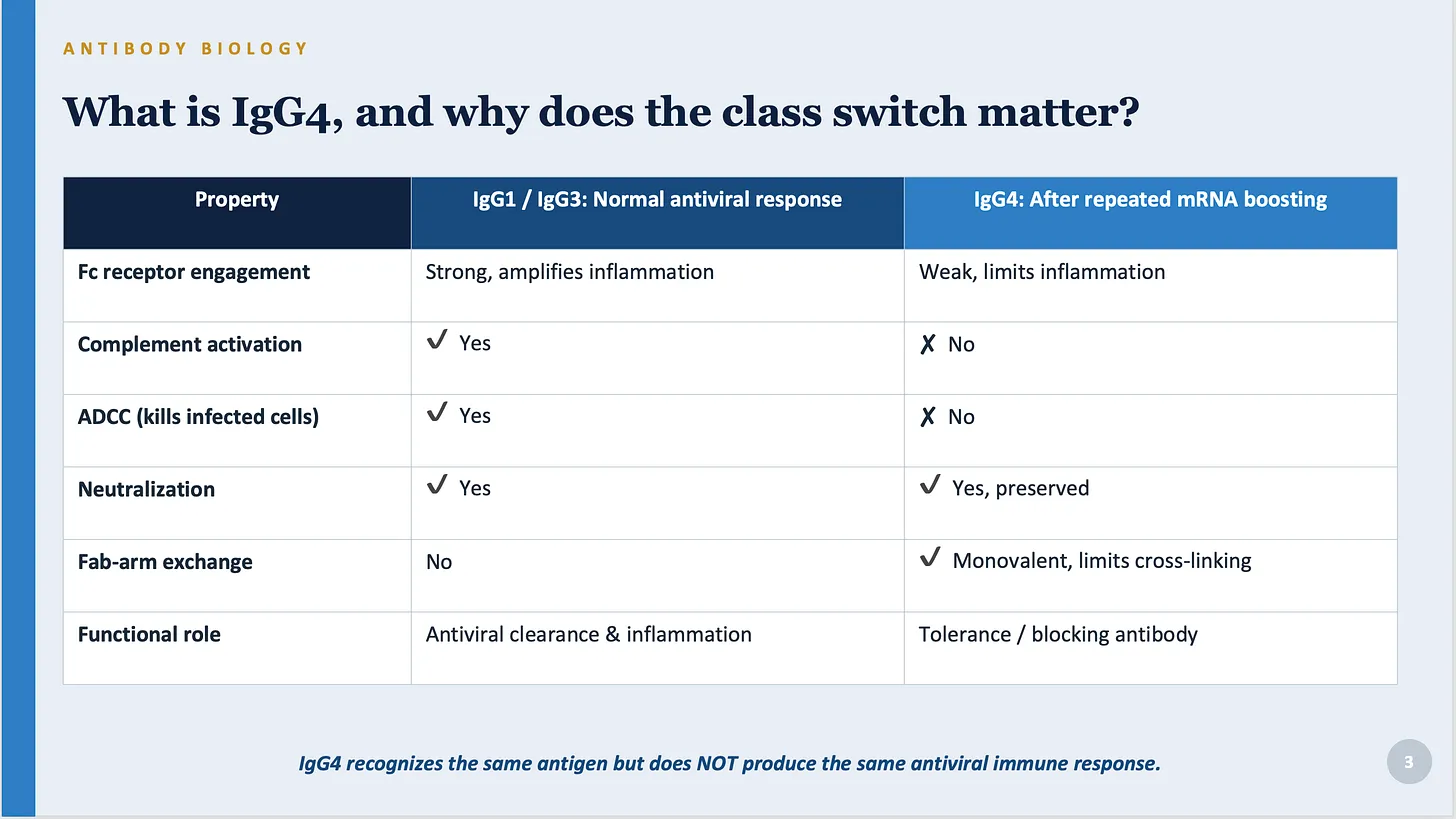
Your body makes several types of antibodies, labeled IgG1 through IgG4. When you encounter a virus or receive a vaccine for the first time, your immune system mostly produces IgG1 and IgG3. These are your fighter antibodies. They do two key things:
• They block the virus from entering your cells (this is called neutralization).
• They recruit other immune cells to find and destroy cells the virus has already infected. This second function is called ADCC (antibody-dependent cellular cytotoxicity), and it depends on a part of the antibody called the Fc region.
IgG4 is different. It is sometimes called the tolerance antibody. In normal life it appears in small amounts, mostly in situations where your immune system has been exposed to something repeatedly and decided it is not a threat, like bee venom in beekeepers or allergens in people completing immunotherapy. IgG4 can neutralize a virus, but it cannot perform ADCC, activate complement (another arm of the immune defense), or engage immune cell receptors that recruit other defenders to clear an infected cell.
In other words, IgG4 is a blocking antibody. It recognizes the virus and gets in the way, but it does not tell the rest of the immune system to attack

