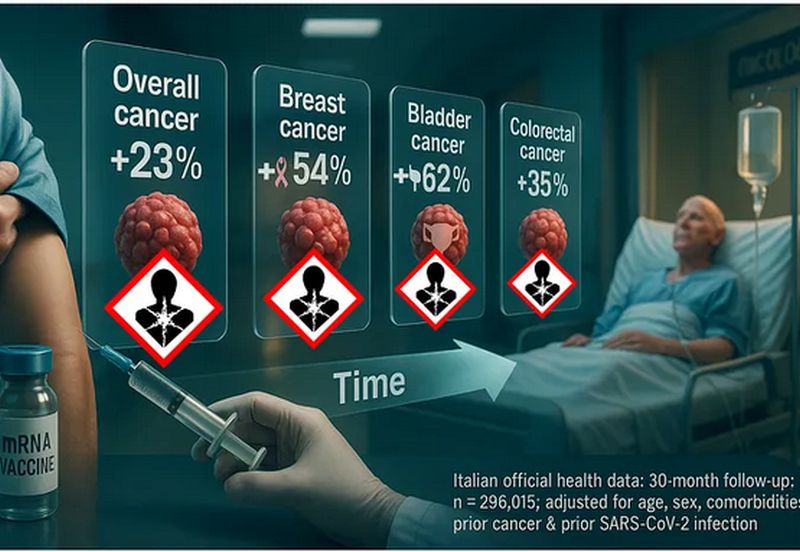

Official government data from nearly 300,000 people tracked for 30 months show mRNA shots significantly increase the risk of overall cancer, breast cancer, bladder cancer, and colorectal cancer.
A groundbreaking new peer-reviewed study has just been published in EXCLI Journal. For the first time, researchers formally analyzed the long-term relationship between COVID-19 vaccination and cancer hospitalizations in a population-wide cohort of nearly 300,000 residents of Pescara province, Italy.
The study followed every resident aged ≥11 years for 30 months (June 2021 through December 2023) using official National Health Service data. The main vaccines administered were Pfizer-BioNTech (Comirnaty) and Moderna (Spikevax) mRNA shots, with smaller proportions receiving AstraZeneca (Vaxzevria) and Janssen (Johnson & Johnson) viral vector vaccines.
Importantly, the statistical models were adjusted for age, sex, comorbidities (diabetes, hypertension, cardiovascular disease, COPD, kidney disease), prior cancer, and prior SARS-CoV-2 infection — ensuring that infection status was explicitly taken into account. This makes it the longest and most comprehensive follow-up to date on cancer outcomes after COVID-19 vaccination.
The results are deeply concerning: while the study shows the expected biases that make vaccines look like they reduce overall death rates, it also uncovers the first statistically significant evidence of increased cancer risk following COVID-19 vaccination.